
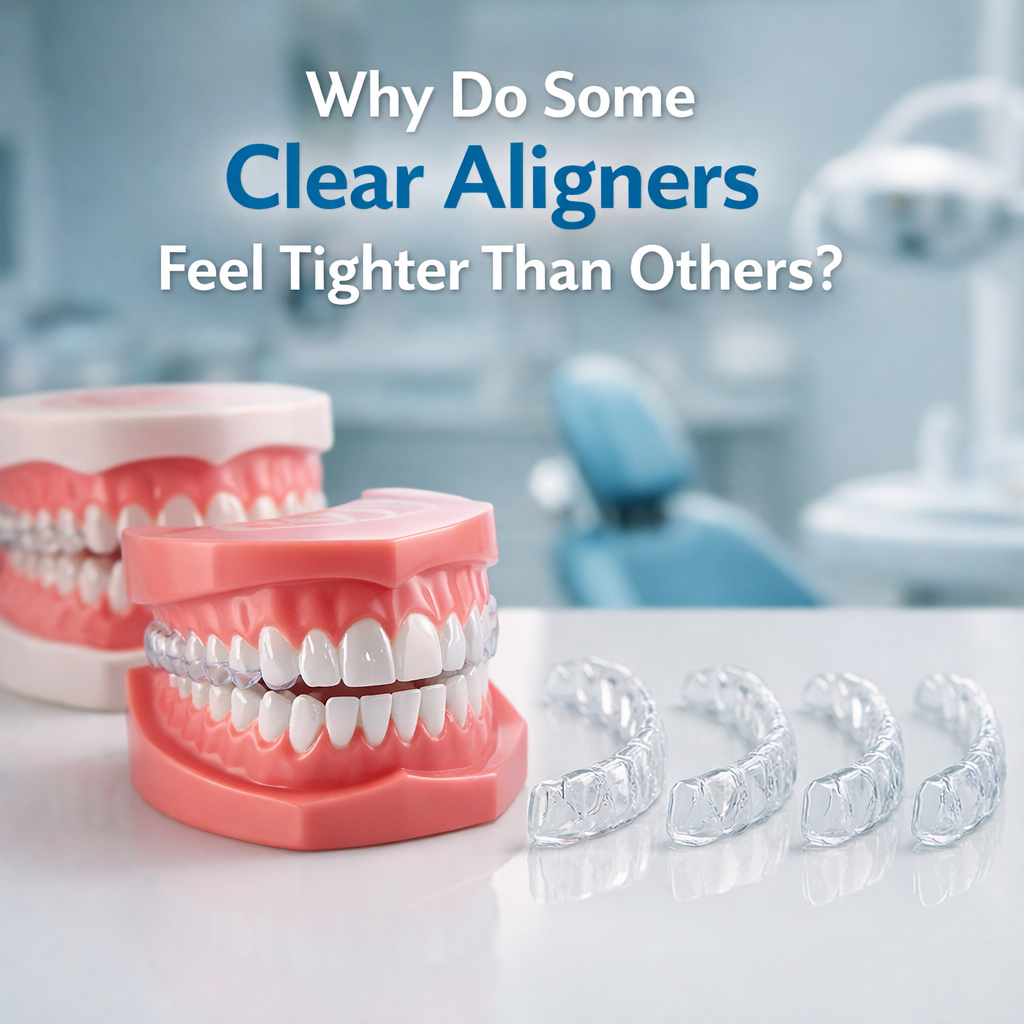
Introduction
Starting with clear aligners can feel exciting, but it is not unusual for people to be surprised by how they feel once they are on. For some, the first set slips on easily. For others, each new tray might feel tighter, a little strange, or not quite what they expected. These changes in comfort are normal, and they do not always mean something is wrong. They can come from small factors like the type of material the aligners are made from or how each one is shaped. At Todaro Dental in Livonia, we offer both Invisalign and Spark clear aligners that use a series of custom, removable trays to move teeth gently and discreetly over time.
When we look at a clear aligners comparison, even small details can make a difference. These trays all work to shift teeth over time, but the way each one feels in your mouth can vary from person to person. That is expected. If you are in Livonia and just started your clear aligner journey this winter, you are not alone in wondering why things might not feel exactly how you imagined.
Why Some Aligners Feel Tighter Than Others
Most aligners work on a schedule, with new trays introduced every couple of weeks. So when a new one feels tighter, it usually has a simple reason behind it. These trays are meant to move teeth in small steps, and that snug feeling often means your smile is shifting the way it is supposed to.
Here are a few reasons that tightness shows up:
- Each new aligner is set just a bit ahead of where your teeth currently are, so it can gently guide them
- If your teeth shifted more slowly or quickly than expected during the last set, the next tray might feel extra snug
- Some people naturally have more sensitivity in their gums or bite, which can increase the feeling of tightness
None of this means your aligners are not working. In many cases, that tight start fades within a few days, as your mouth adjusts.
Material Differences Between Aligners
Not all aligners are made the same way. That means they do not always feel the same either. The material used can change how flexible the trays are or how smooth the surface feels. Some may feel a bit firmer when snapped into place, while others might be a little more flexible. Because aligners are removable, you can take them out to eat, brush, and floss, which helps keep teeth cleaner throughout treatment.
Here is what can cause a difference in feel:
- Some brands use a slicker plastic that feels smoother when worn
- Others may use a stiffer design that fits tighter around the teeth to add structure
- Temperature and storage can also impact feel slightly, especially when it is cold outside, like in Livonia winters
While the material can change comfort levels, it is not often something people notice after the first few days with a new tray. Still, it is helpful to know that if something feels “off,” it might just be a design detail, not a problem.
What to Expect During the First Few Days
When you switch to a new set of trays, it is normal to feel some tightness, pressure, or a little discomfort. This does not mean anything is going wrong. In fact, it is one of the ways you can tell the aligners are doing their job. Most plans involve wearing aligners 20 to 22 hours per day and changing to a new set every 1 to 2 weeks, so brief periods of extra pressure are built into the process.
Here is what many people tend to experience during that early adjustment:
- Day one might come with mild soreness, mostly when biting or removing trays
- That pressure often fades by day three or four as your teeth begin to move
- Talking and swallowing may feel different, but that becomes more natural quickly
The important thing to remember is that changing trays takes a little getting used to. Some trays pass by barely noticed. Others make more of an impression. Either way, it will not last forever.
Clear Aligners Comparison and What Matters Most
There is no one-size-fits-all when it comes to aligners. A clear aligners comparison often comes down to what people feel most when they wear them. That can include how well they fit, how noticeable they are during the day, or how easy they are to pop in and out.
When thinking through the differences, people tend to focus on a few common things:
- Comfort, do the trays sit smoothly or pinch a little at the edges?
- Fit, are the trays snug without being too tight?
- Look, are they visible or do they blend in well?
- Experience, is it easy to speak, drink water, or keep them clean?
If you end up feeling unsure whether a tray feels right or not, that is when checking in with a dental provider can help. Aligners are meant to guide your smile gently, not push too hard or cause big changes overnight.
Comfort Takes Time: Why That’s Perfectly Normal
Teeth do not shift immediately. That is one of the reasons aligner comfort can change a little as the weeks go on. Every mouth is different, which means every timeline is different too. The goal is not to rush into a perfect fit. It is to give your smile the space and time it needs to move in small, steady ways.
Annoying pressure and strange sensations might come and go, but most of them pass quickly. What felt awkward in week one might go completely unnoticed by week three. That is part of what makes aligners work so well, they are made to move with you, not against you.
If something feels different from what you expected, take a breath. You are likely not alone in that. Minor discomfort now often leads to something better ahead, and most people adjust faster than they think. That is a good thing to hold onto during a cold January in Michigan, when a little comfort inside matters more than ever.
Getting used to new aligners can be surprising, and many patients in Livonia wonder if their trays are working as expected. We know the questions about how each set fits or feels and suggest a simple clear aligners comparison to help explain the differences in material, fit, and comfort. At Todaro Dental we understand that every patient adjusts at their own pace, so if you have any concerns along the way, we are here to help, just contact us.
0 Comments