

Introduction
Jaw pain is something many people feel at one time or another, especially during colder months. As winter sets in and stress levels rise with the holidays, it’s not unusual to start clenching without realizing it. For some, that tight feeling in the jaw might seem like a one-time ache. For others, it could be something more, especially if it comes back often or affects daily activities.
That’s where understanding TMD symptoms for jaw pain can make a big difference. This kind of discomfort is sometimes brushed off or misread as something minor. But the more you know about TMD, the easier it is to spot the signs and figure out when it may be time to get support.
What Is TMD and How Does It Affect the Jaw?
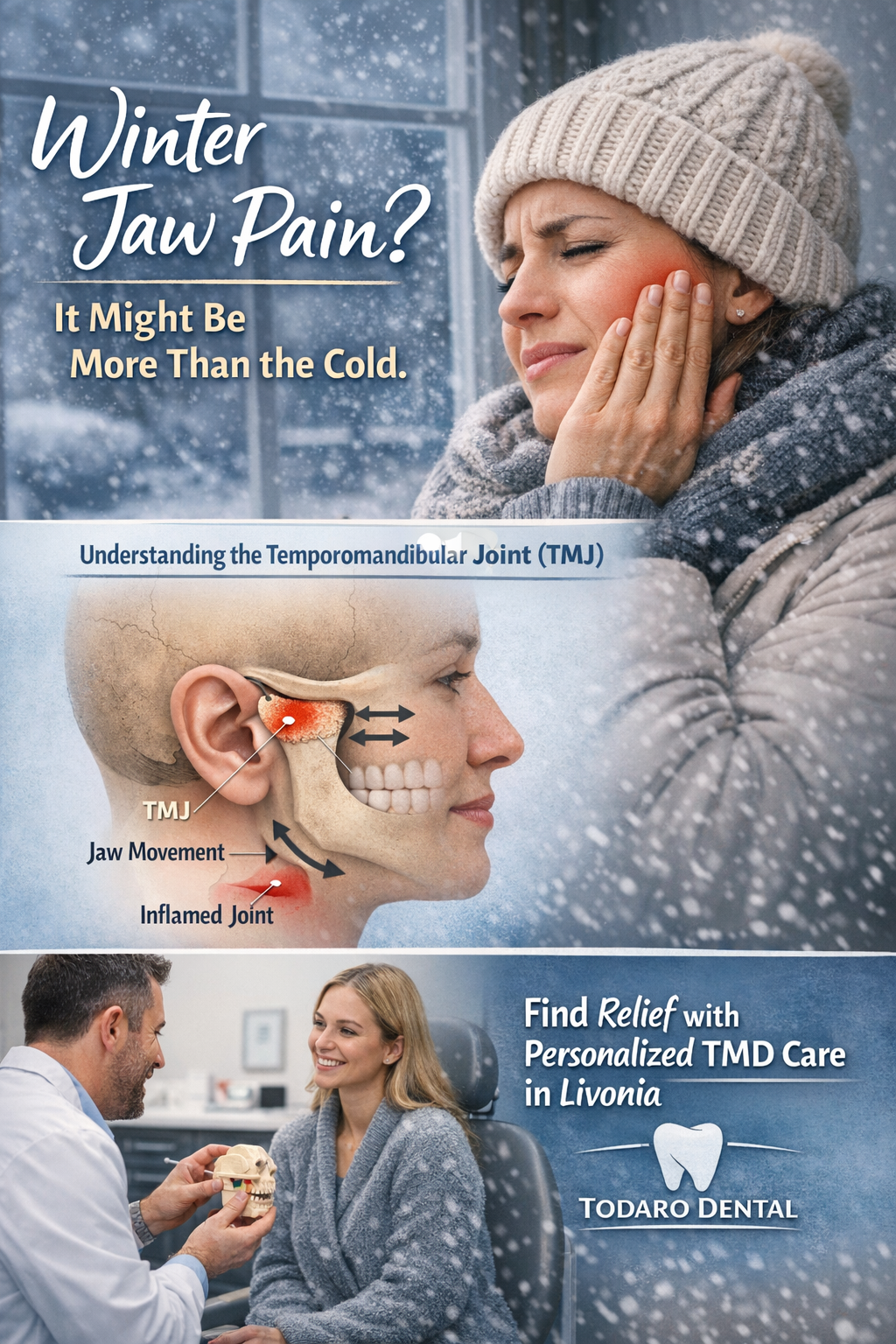
TMD stands for temporomandibular disorder. It affects the temporomandibular joint, which sits just in front of each ear and helps your jaw open, close, and move from side to side. It’s the joint you use whenever you eat, talk, yawn, or chew gum.
When that joint isn’t working smoothly, it can throw off more than just jaw movement. You might feel soreness or stiffness, or hear clicking when you open your mouth. Cold weather and holiday-related stress in places like Livonia, Michigan, can make TMD symptoms more noticeable. Muscles tend to tighten with lower temps, and stress can cause more clenching or grinding, especially at night, when it’s hard to control.
Todaro Dental uses modern TMD therapies designed to help patients minimize discomfort, improve jaw function, and address symptoms using conservative, non-invasive techniques.
Common Signs of TMD That May Show Up as Jaw Pain
One of the reasons TMD can be tricky to catch is that it doesn’t always look the same for everyone. The symptoms can rotate, come and go, or even feel like they’re coming from somewhere else.
Some typical signs that often show up with TMD include:
- Pain or soreness near the ears or along the sides of the jaw
- Popping, clicking, or grinding sounds when moving the mouth
- A tight or locked feeling when trying to open wide
- Tenderness that worsens later in the day or after chewing
Jaw pain that sticks around or turns up frequently might get mistaken for an ear issue, a sinus problem, or a toothache. That’s why paying attention to patterns over time can help connect the dots.
When Everyday Jaw Pain Might Suggest Something More
Occasional tightness in the jaw happens to most people, especially when the weather shifts or stress levels rise. But when the ache turns into a regular part of your day or starts getting in the way of your routine, it may be sending you a signal to look deeper.
Watch for red flags like:
- Morning jaw pain that follows a night of clenching or grinding
- Trouble chewing chewy foods or avoiding them altogether
- Pain that keeps coming back even after rest or stretch breaks
- Soreness that affects your sleep or makes you hesitant to yawn or laugh
If pain shows up every time you do something specific, like driving long distances or working at a screen for hours, that’s another clue that your jaw might need more attention.
How Lifestyle, Habits, and Stress Play a Role
Most people don’t think much about what their jaw is doing throughout the day. But small, repeated habits can add tension over time. Whether it’s chewing on pens, leaning into one side while reading, or cracking stiff joints often, these behaviors can slowly wear on jaw comfort.
Other factors to keep in mind:
- Chewing gum regularly or biting fingernails can strain jaw muscles
- Slouching or poor neck posture impacts the way your jaw rests
- Holding stress in your face or clenching during sleep can make tightness worse
The holiday season often comes with extra to-do lists, busy traffic, and long hours indoors, all things that can make habits slip or stress levels rise. That’s why December tends to be a time when we see more flare-ups or first-time signs of TMD discomfort.
Supporting Jaw Comfort Through Small Changes
You don’t need to make big changes overnight to feel a little relief. Sometimes just noticing when you’re clenching during the day can make a big difference. Being aware of how stress and routine affect your comfort is a helpful starting point.
If your jaw soreness is acting up, you might try:
- Eating softer foods for a day or two
- Taking short breaks from screens or desk work
- Checking in with yourself after a stressful day to see how your jaw feels
Todaro Dental emphasizes a holistic, patient-centered approach to diagnosing and treating TMD, focusing on custom treatment plans that align with each patient’s comfort and lifestyle.
While these small shifts might bring temporary ease, deeper patterns often need more than at-home adjustments. If discomfort keeps returning, professional attention may help uncover whether TMD is part of the picture.
Listening to Your Jaw for a Healthier Tomorrow
That aching feeling near your jaw might seem like minor soreness or just a reaction to stress. But it can also be the body’s way of bringing attention to something that runs deeper. When those signs are understood early, it’s easier to make changes that support comfort and reduce strain.
Paying attention to jaw tension, aching, or clicking now can prevent bigger oral health concerns in the future. In Livonia, Michigan, Todaro Dental is committed to helping patients recognize and address TMD symptoms for greater comfort and confidence all year long.
Jaw tension, aching, or clicking might signal a deeper issue. At Todaro Dental, we help Livonia, Michigan, residents identify and manage early signs that are often easy to overlook. By understanding daily habits and stress factors, you can spot potential TMD symptoms for jaw pain before they become bigger problems. Share what you’ve been experiencing with our team so we can support your everyday comfort. Contact us to schedule your appointment today.
0 Comments